


Lyft
Lyft, Inc.
I approached Lyft as a practical Maps & Navigation app rather than simply a way to request a car. Its real value appears when I need to turn a destination into an actual ride without switching between a map, a taxi service, and a payment process. The experience is built around matching me with a nearby driver, then helping me follow the trip from pickup to arrival.
That sounds straightforward, and most of the time it is. What matters more is how much control I retain during those small but important moments: entering a pickup point, checking the ride details, recognizing the vehicle, monitoring progress, and deciding whether the proposed trip suits my needs. I found the app easiest to judge through those decisions, because a transport app earns trust less through flashy extras than through clear information when I am standing on a busy street.
How Lyft feels when a real trip depends on it
Lyft is a free app from Lyft, Inc. in the Maps & Navigation category. It has been available since August 28, 2012, and its broad adoption is reflected in an average rating of 4.3 from around 535 thousand ratings, with more than 50 million installs. Those figures do not guarantee that every ride will be smooth, but they do show that this is an established service rather than an experimental navigation tool.
Related News

The app is rated for Everyone, and the current Android version is 2025.48.3.1765351207, requiring Android 9 or later. I appreciate that the basic download is free, because the meaningful cost comes from the ride itself rather than from installing the software. Still, I would not confuse a free app with a free transport service: the important financial decision happens when I review the ride option before requesting it.
My first useful habit with Lyft is to treat the pickup location as carefully as the destination. A street address can point to a long building, a shopping center, an airport access road, or a side of a divided street that is difficult to reach. If I request a car while standing at the wrong entrance, the driver may arrive nearby but not where I can safely meet them. I now check the map position and nearby landmarks before confirming.
Related News

Why WhatsApp Messenger Still Makes Everyday Communication Feel Easy

Jurassic World: The Game Is the Better Dino Tycoon for Strategic Players

Threads in Real Life: Who Should Join, Lurk, or Leave

How SHEIN Turned Shopping Into an Endless Content Feed

How to Make Fortnite Feel Smarter on Mobile

Should You Switch to Microsoft Outlook on Mobile?
This is one area where Lyft differs from simply calling a local taxi. A phone conversation can clarify a complicated meeting point, while an app requires me to express that location through its interface. On the other hand, the app gives me a visual reference and keeps the ride details in one place. For ordinary curbside pickups, that is faster. For unusual venues, I slow down and verify the exact side of the road.
Pickup accuracy is the first trust test
When I am leaving a concert, office complex, hospital, or large hotel, I avoid requesting the ride while moving through a crowd. I find a safe, visible place first, then check whether the pin matches that spot. This small workflow prevents a common mistake: assuming that the nearest map label is automatically the best pickup point.
I also look at the vehicle and driver information before approaching a car. That is not just a convenience; it is a basic identity check. If the arriving vehicle does not match what the app shows, I would not get in simply because the driver appears to be waiting. The app is most useful when I use its displayed details as a checklist rather than treating the arrival notification as permission to rush.
Gallery
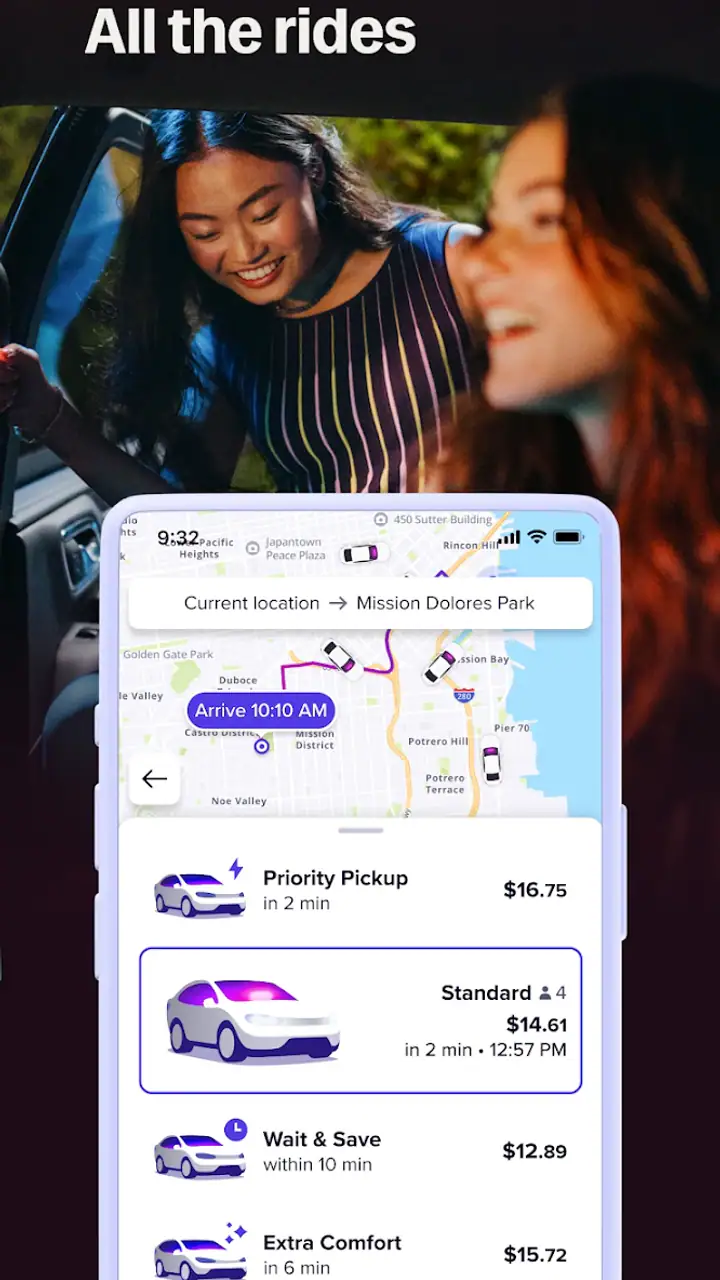
For visitors who do not know a city, the service can reduce the uncertainty of explaining an address in an unfamiliar language or neighborhood. For regular commuters, the benefit is more about repeatability: the same general process can be used before work, after dinner, or when public transit is no longer convenient. I found that consistency more valuable than any single screen.
What I check before requesting a ride
I recommend pausing at the confirmation stage instead of tapping through automatically. I check the destination spelling, the pickup marker, and the ride information presented for that request. This is also the moment to decide whether the proposed service matches the situation. If I am carrying bulky equipment, traveling with several people, or facing a tight appointment, I do not assume that the first available option will be ideal.
A useful, less obvious approach is to separate navigation planning from ride requesting. I can first consider where I actually need to be dropped off, especially at a campus or large venue, and only then arrange the car. That prevents the common problem of reaching the correct general address but still being far from the entrance I need.
Lyft is also not a substitute for a dedicated public-transit planner in every situation. If a train or bus can take me directly and I am planning around transfers, schedules, or walking routes, a transit-focused tool may offer a clearer overview. Lyft makes the most sense when the final movement requires a driver, when time matters, or when carrying luggage makes multiple transfers unattractive.
Account controls matter more than convenience alone
A ride-hailing account contains information connected to movement, so I pay attention to the choices visible inside the app and to the information requested during normal use. I prefer apps that let me understand what I am doing before a trip begins: where the ride starts, where it ends, and what action I am confirming. With Lyft, I treat each request as a deliberate transaction rather than leaving the app to make assumptions on my behalf.
My practical privacy rule is simple: I use the app when I need its transport function, and I review account and device settings instead of granting access casually. I do not infer that an app is trustworthy merely because it is popular, and I do not assume that a permission is harmless because it appears during setup. I look for visible choices, read prompts, and keep only the access that fits how I use the service.
This matters especially for people who share a phone, use a work device, or regularly travel with family members. Before requesting a ride for someone else, I make sure the destination and pickup details are clear to the actual passenger. A friend who is waiting outside a venue should know where the car is expected and what identifying information to check, rather than relying on a vague “the car is coming” message.
Another good control is reviewing the trip context before confirming. If the ride is for an early flight, I consider whether the pickup point is accessible and whether I have enough time to handle a delay or a misplaced pin. If I am returning late at night, I choose a visible meeting place rather than an isolated corner. These are not special buttons; they are user choices that make the app safer and more predictable in practice.
Data-sensitive moments during a ride
The most sensitive moments are not limited to account creation. They occur whenever I enter a home address, travel to a medical appointment, visit a workplace, or request a ride from a location that reveals something personal. I am careful about saving or reusing destinations when a one-time entry is enough. I also avoid discussing private information in pickup notes unless it is genuinely needed to complete the ride.
I consider the destination field a piece of personal context, not just a route instruction. That changes how I use it. I enter the clearest practical location, but I do not add unnecessary explanations about why I am going there. If a building has multiple entrances, I use a concise landmark that helps the driver find me without turning the note into a personal description.
Location access is another point where I prefer active attention. When I am ready to request a ride, accurate location can be useful for placing the pickup marker. When I am not using the service, I review the device’s permission controls and choose the setting that matches my comfort and needs. I do not treat an automatic prompt as a reason to grant broader access than necessary.
For families, the privacy question becomes more complicated because one person may request a ride for another. I would explain the pickup and destination clearly to the passenger and avoid sending someone into a car based only on a first name or a general description. The app can organize the request, but the people involved still need to verify the practical details.
Where the app gives me useful agency
Lyft works best when I remain involved in the process. I choose the pickup point, review the route context, identify the arriving vehicle, and decide whether the ride is appropriate before entering. That may sound obvious, but it is the difference between using a ride service thoughtfully and treating it like a vending machine.
I also value the ability to reconsider a request before it becomes a real-world meeting. If the pickup location looks wrong, I correct it before the driver reaches the area. If the destination is unclear, I resolve that first. The earlier I catch a mistake, the less friction it creates for both sides. This is a better workflow than waiting until the car arrives and trying to explain everything from the curb.
One concrete use case is a rainy evening after work. I might leave an office through a side entrance, open Lyft, and notice that the map has selected the main entrance instead. Rather than standing in the rain and waving at passing cars, I move to a visible covered spot, adjust the pickup location, and confirm the destination. That extra minute improves the odds of a clean handoff far more than repeatedly refreshing the screen.
Another is a trip to an airport or station. I use the destination that corresponds to the correct terminal or entrance, then check the pickup side when arranging the return journey. Large transport hubs can make a generic address misleading. A general taxi may be more flexible if a dispatcher can give direct instructions, but Lyft is convenient when I already know the correct meeting area and want the request, driver details, and trip progress together.
Strengths that become clearer with regular use
The strongest part of Lyft is the focused journey from request to pickup. It is not trying to be a full travel guide or a replacement for every kind of map. Instead, it connects a location need with a driver and keeps the ride process understandable enough for everyday use. That narrow purpose helps when I am in a hurry.
I also find it more approachable than arranging transport entirely by phone. A phone call can be awkward in a noisy street, and repeating an address creates room for misunderstanding. The map-based process gives me a visual way to inspect the starting point. For people who prefer seeing information before speaking to anyone, that is a meaningful advantage.
The app’s large user base can also make it easier to recommend to visitors or less technical relatives, because the general idea is familiar: enter where you are, enter where you are going, review the request, and meet the arriving driver. I would still help a first-time user practice with a simple daytime trip rather than introducing the app during a stressful airport transfer.
Its limitations are just as important. A digital pickup can be awkward in places with poor signage, restricted access, crowded sidewalks, or multiple roads with similar names. The app cannot remove the physical complexity of a location. I may still need to walk to a safer meeting point, communicate clearly, or choose a traditional taxi when immediate human coordination is more useful.
When another option is the better choice
I would skip Lyft when my main need is detailed walking, cycling, or public-transit planning rather than a driver. A dedicated map or transit application can be better for comparing routes, understanding transfers, or planning a full day around several stops. Lyft is strongest for the ride itself, not for every layer of a broader journey.
I would also consider a local taxi when I am in an area where app-based pickup is inconvenient, when a dispatcher can handle a complicated location, or when I need a service arrangement that the app does not clearly present. The familiar alternative may be less elegant, but direct communication can be valuable in unusual circumstances.
For a solo traveler, the trade-off is convenience versus attention. The app reduces the work of arranging a car, but I still need to check the details and identify the vehicle. For a family, the trade-off is coordination: one person may control the request while another waits at the curb. For a commuter, the trade-off is flexibility: a ride can save time, but a reliable train or bus may be more predictable for a repeated route.
I would not recommend installing it solely because everyone else uses it. The right question is whether I regularly need on-demand rides and whether I am comfortable managing location and account choices through an app. If I mostly walk, cycle, or use fixed public transport, it may add little value. If I often need a car at short notice, its focused workflow is much easier to justify.
My cautious verdict after using it as a transport tool
Lyft is a capable free Maps & Navigation app for people who want a clear way to request and follow a ride. I like it most when I use it deliberately: confirm the exact pickup point, review the trip before requesting, check the arriving vehicle, and keep sensitive destination details as limited as practical. Those habits make the experience feel more controlled.
The app is not magic, and its convenience does not eliminate the need for judgment. A wrong pin, a crowded venue, or an unclear destination can still create delays. Privacy-conscious users should review visible account and device controls instead of assuming that popularity answers every trust question. People who need transit planning or hands-on dispatch may prefer another tool.
For my own use, I would recommend Lyft to a friend who wants straightforward access to driver-based trips and is willing to spend a few seconds checking the details. The best reason to choose it is not the promise of a perfect journey; it is the practical combination of map-based pickup, ride organization, and user decisions in one place. Used with that cautious mindset, it is a useful everyday option rather than something I would rely on blindly.
FAQs for Lyft
How does Lyft work and what features does it offer?
Lyft is a ridesharing app that connects passengers with local drivers at the tap of a button. The app offers features such as ride scheduling, ride sharing with others to reduce costs, and multiple vehicle options, including luxury and larger vehicles. Users can also rate drivers and provide feedback directly through the app.
Is Lyft available in my area and how can I check?
Lyft operates in numerous cities across the United States and Canada, but availability can vary. To check if Lyft is available in your area, simply download the app and enter your location. The app will notify you if services are accessible in your region and provide a list of nearby drivers if so.
What are the costs associated with using Lyft?
Lyft pricing depends on factors such as distance, time, and demand. The app provides a fare estimate before you confirm a ride, ensuring transparency. Additionally, Lyft offers various promotions and discounts. Keep in mind that during peak times, fares may be higher due to increased demand, often referred to as 'surge pricing.'
How safe is it to use Lyft?
Lyft prioritizes safety by conducting thorough background checks on drivers and offering an in-app emergency assistance feature. Passengers receive detailed driver information and vehicle details before a ride begins. Additionally, users can share their ride details with friends and family for added security. Always verify driver information before entering a vehicle.
What payment methods does Lyft accept and how are payments processed?
Lyft accepts various payment methods, including credit and debit cards, PayPal, and select digital wallets. Payments are processed automatically through the app once your ride is complete, ensuring a seamless and cashless transaction. Users can also add a tip for the driver within the app after the ride.
Pros
- User-friendly interface enhances navigation.
- Quick and easy ride booking process.
- Multiple ride options suit various budgets.
- In-app payment makes transactions seamless.
- Real-time ride tracking for safety.
Cons
- Surge pricing can increase costs.
- Limited availability in rural areas.
- Occasional driver cancellations.
- App can drain battery quickly.
- Customer support response time varies.


